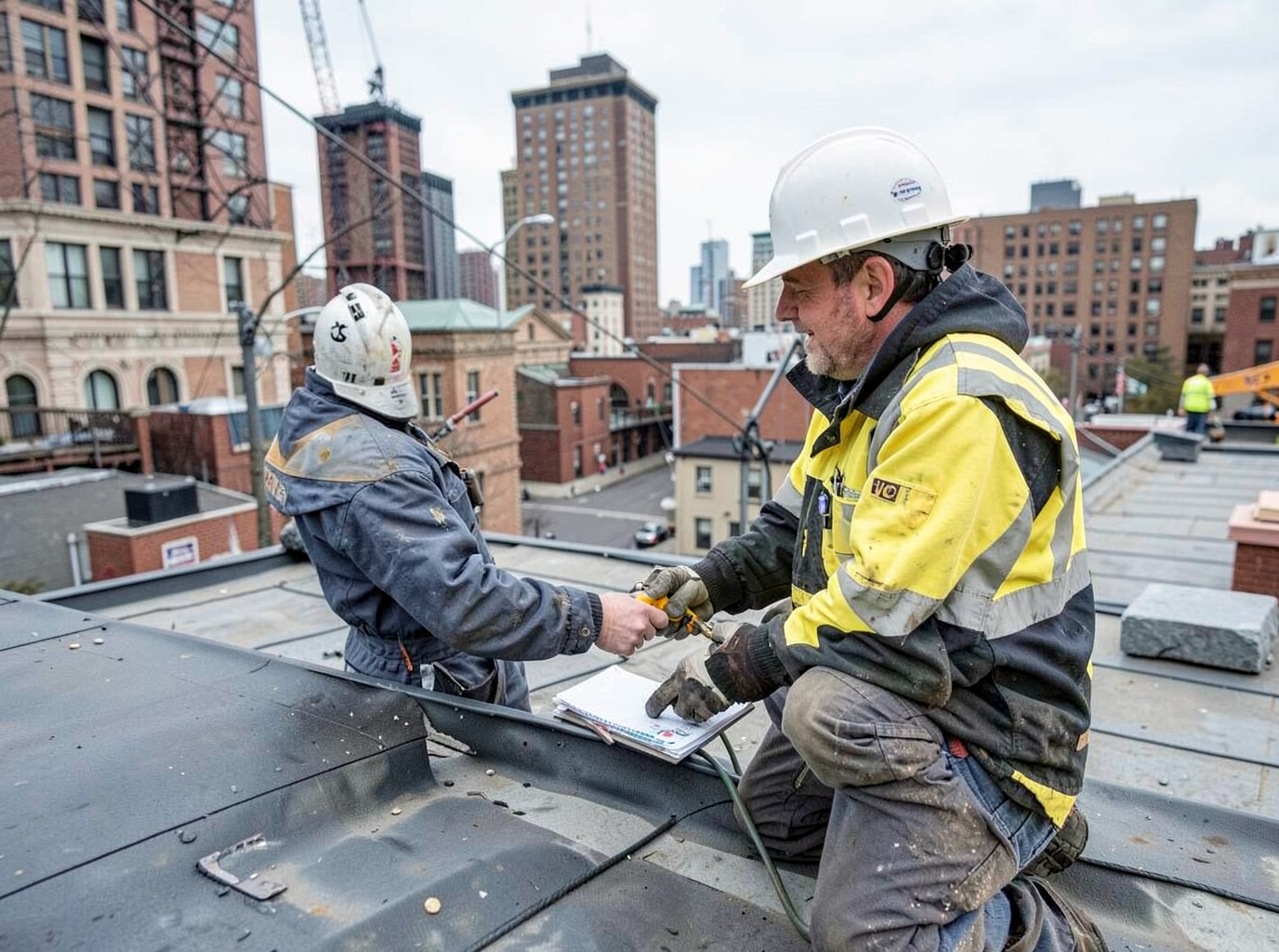
Garfield's tightly packed commercial and mixed-use buildings near NJ-21, NJ-46, and CR-507 put roofs under constant strain from tight setbacks, shared parapet walls, and limited roof access for equipment. Bergen County's humid subtropical climate cycles through sticky summers and freeze-thaw winters, which accelerates membrane fatigue and ponding around low-slope roofs common on the borough's older commercial stock near Garfield Park and its historic church properties. Rooflines packed close together also mean debris, leaf litter, and runoff from neighboring structures collect faster, clogging drains and stressing seams. An inspection here needs to check parapet flashing, drain lines, and membrane seams with extra attention given the density and age of the building stock. NJ Commercial Roofing Pros, based out of Jersey City, schedules Garfield inspections around tight street access and limited on-site parking near the borough's core commercial strips.
Commercial Roof Inspection in Garfield — What We Handle
- ✓Dense block-to-block construction limits access for ladders and lifts, so inspections are planned around narrow lot lines
- ✓Older buildings near Garfield Park and the historic church district often have aging flashing and drainage that need closer scrutiny
- ✓Humid subtropical swings between summer humidity and winter freeze-thaw cycles accelerate seam and membrane wear
Commercial Roof Inspection Services We Offer in Garfield
✓Routine Preventive Inspections
Spring and autumn checks that catch seam separation, flashing movement and drainage problems while they are still small, before winter damage turns into a leak.
✓Roof Condition Assessment
A full condition report covering system type and age, membrane and flashing condition, drainage, deck condition where visible, and an estimate of how much service life the roof has left.
✓Post-storm Damage Documentation
Dated, photographed documentation of wind, hail and storm damage, separating storm damage from pre-existing wear, which is the distinction an insurance claim turns on.
✓Pre-purchase and Due Diligence Surveys
Condition reports for buyers and lenders evaluating a commercial property, with a remaining service life estimate and expected spend over the coming years to inform the reserve.
✓Warranty Compliance Inspections
Dated inspection records built to satisfy manufacturer requirements, since no dollar limit coverage commonly depends on documented periodic inspection and a maintenance record.
✓Membrane and Flashing Surveys
Close survey of TPO, PVC, EPDM, modified bitumen and built-up membranes, plus flashing at parapets, curbs, terminations and counter flashing.
✓Drainage and Ponding Evaluation
Drain, scupper and gutter checks with low areas mapped, identifying water that stands past 48 hours after rain and the slope or capacity problem behind it.
✓Rooftop Equipment and Curb Inspection
Checking seals and membrane condition around HVAC units, exhaust fans, conduit runs and equipment pads, where vibration and service traffic wear the roof fastest.
✓Portfolio and Capital Planning Surveys
Several buildings assessed and documented together, set out so you can see which roofs need spending this year and which can wait, ready to go into a capital budget.
Most commercial roof failures are visible long before they become emergencies. They start as a blistered seam beside a rooftop unit, a scupper filling with debris, or a patch from four years ago that was never properly tied into the original system. An inspection worth paying for is not a walk-around with a flashlight. It covers membrane seams and laps across the field, flashing at parapets, curbs and terminations, coping and counter flashing, drainage and ponding patterns, and the condition of every penetration. It also looks at how previous repairs were made, because mismatched materials over an existing system are a steady source of leaks that nobody has traced yet.
The New Jersey climate does specific things to a roof, and a useful report says which of them is happening to yours rather than issuing a general pass or fail. Summer heat drives UV breakdown and expands asphalt based systems. Winter contraction opens seams and flashing joints. That annual expansion and contraction cycle is what eventually opens a roof that looked sound the previous year. Buildings on exposed sites, near the coast or on open industrial parcels, take more wind driven rain and, closer to the shore, salt air that corrodes metal edge trim, curbs and fasteners faster than an inland building sees.
How It Works in Garfield
- 1
Scheduling and access
Roof access gets coordinated with facilities staff or the property manager around building hours and tenant activity. If the roof is still under manufacturer warranty, tell us at this point so the report is built to meet what that coverage requires.
- 2
Rooftop condition survey
A full survey of membrane and seams across the field, flashing at parapets, curbs and terminations, coping and counter flashing, drains, scuppers and gutters, every penetration, and the condition of previous patch work. Wear patterns around rooftop equipment and traffic paths get particular attention.
- 3
Drainage and ponding assessment
Drains and scuppers are checked for flow and blockage, and low areas that hold water past the 48 hour threshold get marked. Where drainage is the underlying issue, the report says so rather than listing the resulting membrane damage as the problem.
- 4
Interior check
Where it can be arranged, ceilings and top floor spaces near roof penetrations get checked for staining and moisture evidence. This often reveals long-running slow leaks that show no sign at all from the roof surface.
- 5
Report and documentation
You receive a written report with dated photographs, findings ranked by priority, notes on drainage and rooftop equipment, and an estimate of remaining service life. It is written to be useful for budgeting, for a warranty file, or for an insurance claim.
- 6
Findings review and options
We go through what was found, what needs attention now, what can be monitored, and what the realistic options and costs are. Any repair work is quoted separately from the inspection so there is no pressure attached to the report.
Serving All of Garfield
We regularly handle commercial roof inspection jobs near:
- 📍Garfield Park
- 📍Downtown Garfield
- 📍historic churches along the main corridors
- 📍NJ-21 commercial corridor
- 📍CR-507 business district
Commercial Roof Inspection Pricing in Garfield
Inspection pricing depends on roof size, how many roof levels there are, and how difficult access is. A single accessible low-slope roof is quoted at a flat rate agreed before the visit. Larger buildings, multiple roof levels, or portfolios assessed together are priced per property. Any repair work that comes out of the inspection is quoted separately, so the report is not a sales device. You get the price before we schedule.
Want the full picture of this service? See our Commercial Roof Inspection page, or everything we do in Garfield, NJ.