
2026-08-17 · Mike Dalton
Understanding Factors That Affect Commercial Roof Repair Costs
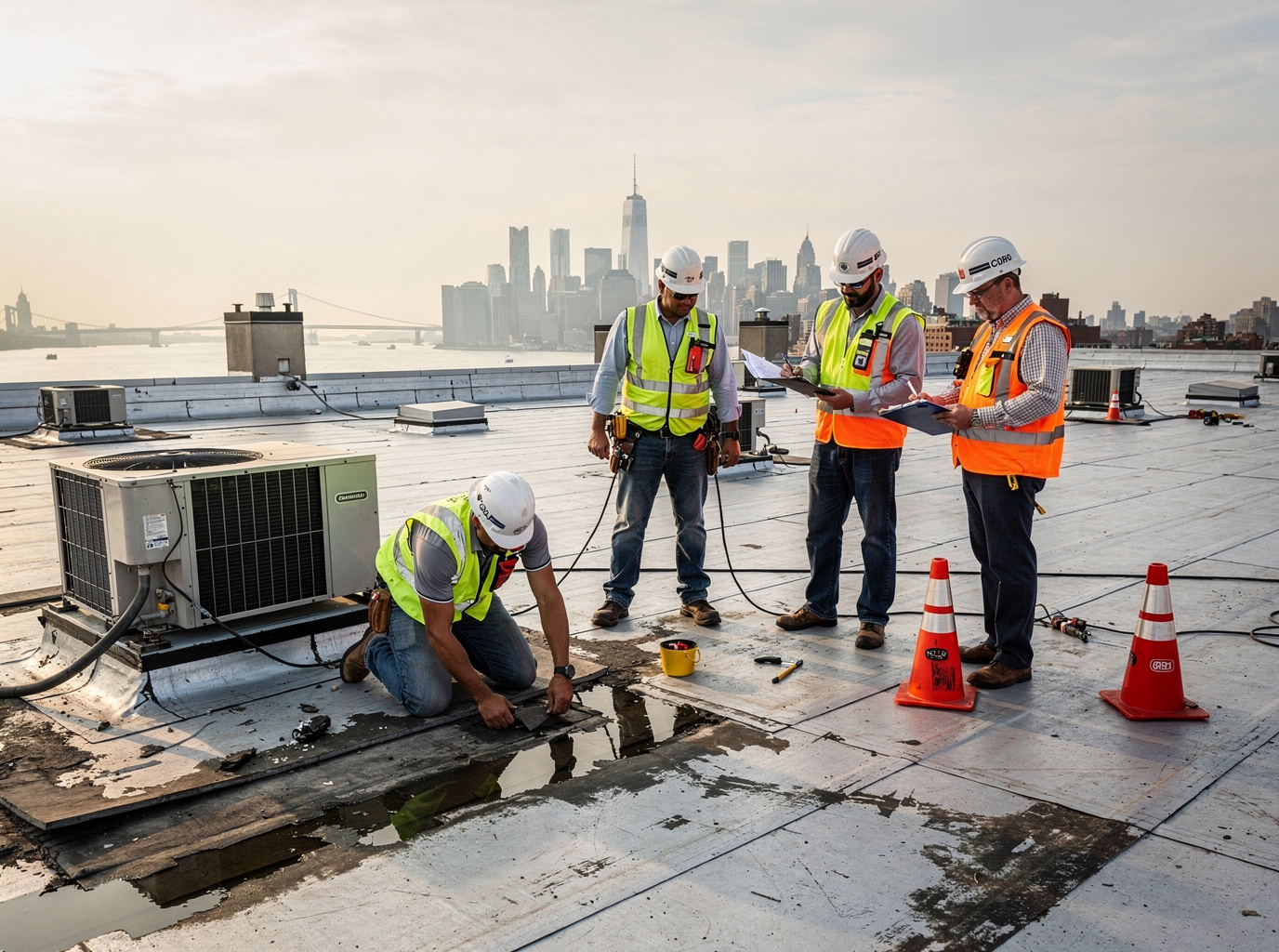
Most commercial roof repairs in Jersey City fall between $400 and $3,500, though large-scale membrane failures or structural repairs can push past $8,000. The exact number depends on roof type, how bad the damage is, how hard the roof is to access, and whether we're patching a symptom or fixing a root cause. After inspecting hundreds of roofs across Hudson County — from low-slope buildings near Journal Square to warehouse roofs in Greenville — I can tell you the biggest cost driver isn't material price, it's how long the problem sat before someone called us.
Roof Type Changes the Math
TPO and EPDM membranes are the most common systems we see on flat commercial roofs in Jersey City, and they price differently. TPO seam repairs run cheaper per square foot because the material welds cleanly, while EPDM patches often need adhesive-set flashing that takes more labor time. Metal roofing repairs — common on older industrial buildings near Bergen-Lafayette — tend to cost more per repair because fastener replacement and panel resealing require specialized crews and sometimes custom flashing. If you're not sure what system is on your roof, that's usually the first thing we identify during a commercial roof inspection before quoting anything.
- TPO: typically $3–$7 per sq ft for patch repairs
- EPDM: typically $4–$9 per sq ft depending on seam condition
- Metal: typically $8–$15 per sq ft for panel or fastener repair
- Built-up/modified bitumen: $5–$10 per sq ft, higher if multiple plies are compromised
Extent and Location of the Damage
A small, isolated puncture or blister costs far less to fix than a widespread membrane failure spread across several sections of roof. We also factor in where the damage sits — repairs near rooftop HVAC units, drains, or parapet walls in buildings around Exchange Place and Newport take longer because we're working around penetrations and equipment that can't be disturbed. Roofs with ponding water issues cost more to repair long-term because the membrane underneath is often more degraded than it looks from the surface; if that's a recurring problem on your building, it's worth reading about managing ponding water on commercial roofs before you approve a quick patch.
Access matters too. A single-story retail building in Van Vorst Park with a simple ladder approach is a straightforward job. A high-rise near Liberty Harbor or Hudson Exchange may need lift equipment or roof-anchor safety setups, which adds labor hours regardless of how small the actual repair is.
Age of the Roof and What It's Hiding
Roofs installed more than 15–20 years ago frequently need more extensive repair than the visible damage suggests, because the underlying insulation or decking has absorbed moisture over time. When we pull back a membrane on an older building near Paulus Hook Historic District, we sometimes find wet insulation that has to be replaced before any patch will hold — that turns a $600 repair estimate into a $2,500 job. This is why an accurate quote requires getting eyes on the actual roof deck, not just a photo of the leak stain on the ceiling below.
If a roof has been patched multiple times already, or if the repair cost estimate starts approaching 25–30% of a full replacement, it's usually smarter to talk through commercial roof replacement options instead of throwing more money at a system that's near the end of its service life.
Seasonal Timing in Jersey City
Jersey City's humid subtropical climate means we deal with two very different failure patterns: summer heat that softens and stresses membrane seams, and winter freeze-thaw cycles that widen small cracks into major leaks. Repairs scheduled during a cold snap sometimes cost more because certain adhesives and membrane materials need to be warmed or applied under controlled conditions to bond properly. Getting ahead of small issues in fall — rather than waiting for a January leak — almost always keeps repair costs lower; our guide on preparing commercial roofs for winter weather covers what to check before temperatures drop.