
2026-08-17 · Mike Dalton
Preparing Commercial Roofs for Winter Weather in New Jersey
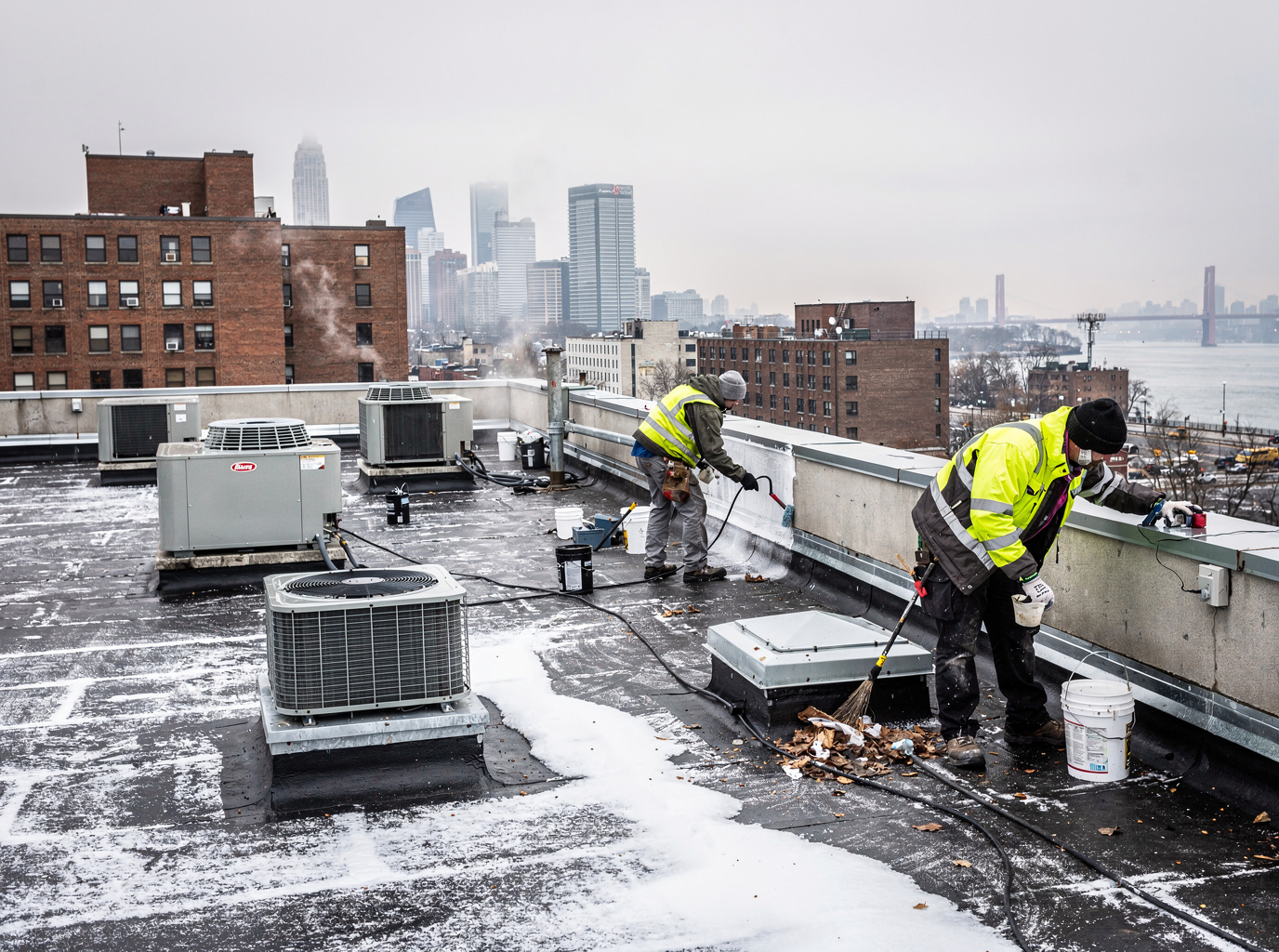
Preparing a commercial roof for winter in Jersey City means getting a fall inspection done by mid-November, sealing any membrane seams or flashing gaps, clearing drains, and budgeting $300–$2,500 for pre-winter repairs depending on roof condition and size. Skip this and you're looking at frozen drains, ice damming, and interior leaks by January — problems that cost far more to fix mid-winter than they would have in October.
Our humid subtropical climate here means roofs bake through hot, sticky summers and then get slammed with freeze-thaw cycles all winter. That swing stresses membranes, seams, and flashing more than a milder climate would. A roof that looked fine in August can develop soft spots or separated seams by the time the first hard frost hits, and once snow or ice sits on a compromised area, water finds its way in fast.
Why Winter Prep Matters More in Jersey City
Buildings in Journal Square, Paulus Hook, and along the Exchange Place waterfront take a beating from wind-driven moisture off the Hudson, and older commercial roofs in The Heights or Greenville often have decades of patch repairs stacked on top of each other. Add freeze-thaw cycling — water gets into a crack, freezes, expands, and widens that crack — and small issues become big ones over a single winter. Flat and low-slope roofs, common on the warehouses and retail buildings near Newport Centre and Liberty Harbor, are especially vulnerable because they rely entirely on drains and slight pitch to move water instead of gravity doing the work for them.
What a Pre-Winter Inspection Should Cover
A thorough fall inspection looks at more than just the obvious. We check:
- Membrane condition — blisters, punctures, or shrinkage on TPO and EPDM systems
- Flashing and seams around HVAC units, vents, and parapet walls
- Drains and scuppers — leaves and debris cause standing water that freezes solid
- Insulation moisture — wet insulation under the membrane loses R-value and can freeze/expand
- Ponding areas — spots holding water more than 48 hours after rain
This is the same scope we cover in a standard commercial roof inspection, and it's worth doing annually regardless of season, but the fall check is the one that actually prevents winter damage. If you want a broader view of what should happen across all four seasons, our piece on year-round maintenance tasks for commercial roofs breaks that down.
Common Repairs Before Cold Weather Hits
Most pre-winter work falls into a few categories:
- Seam and flashing resealing — $150–$800 depending on linear footage
- Drain clearing and scupper repair — $100–$400 per unit
- Localized membrane patching — $300–$1,200 for small punctures or blisters
- Ponding water correction — tapered insulation or additional drains, $1,000–$5,000+
- Full commercial roof leak repair if active leaks are already present
If your roof is older than 15–20 years and showing widespread wear rather than isolated problem spots, patching before winter may just be delaying the inevitable. In that case it's worth getting a straight answer on whether commercial roof replacement makes more financial sense than another season of reactive repairs.