
2026-08-17 · Mike Dalton
How to Spot Early Signs of Commercial Roof Leaks in Jersey City
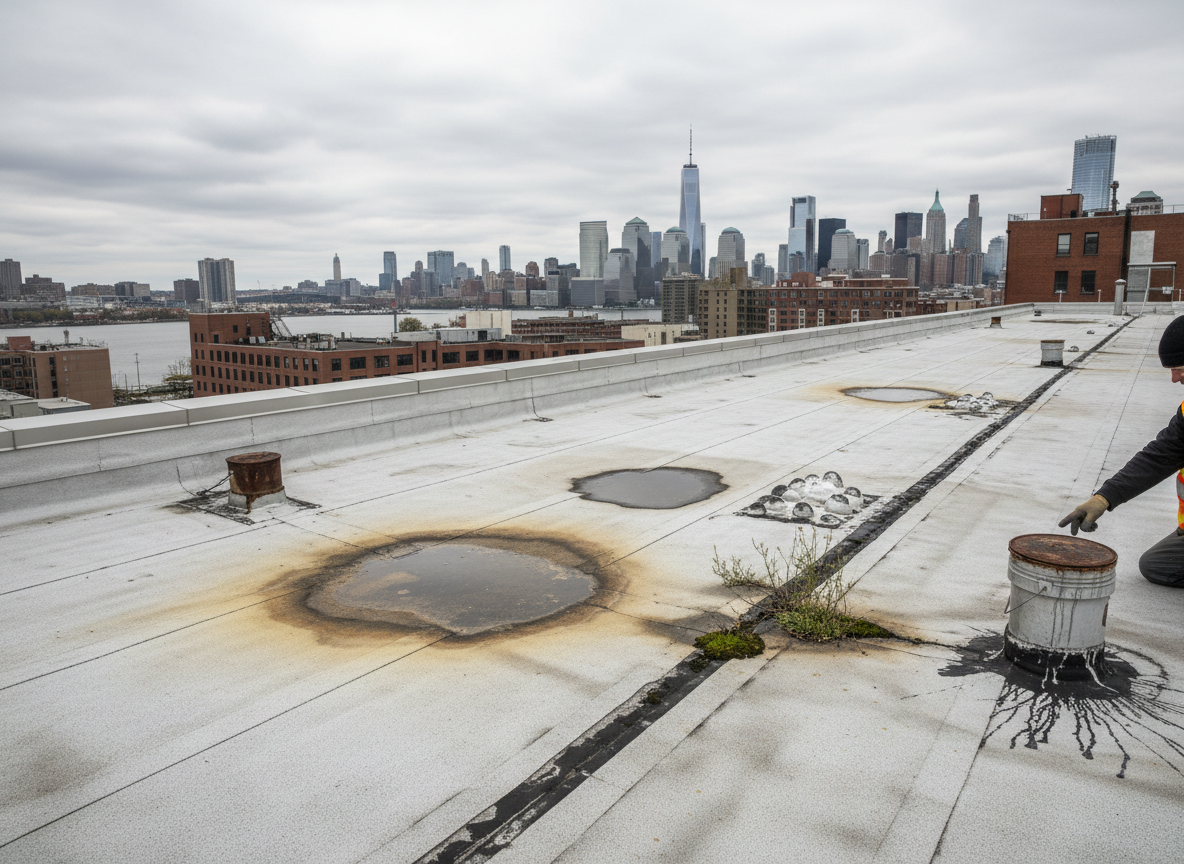
The earliest signs of a commercial roof leak in Jersey City usually show up nowhere near the actual hole — a yellowish ceiling stain in Journal Square, a musty smell near an HVAC curb in Greenville, or a soft spot on the membrane near Liberty Harbor's waterfront buildings. Catching these signs in the first days or weeks, rather than months later when water has traveled through insulation and decking, is what separates a $400–$1,500 patch job from a $10,000+ deck repair. I've walked hundreds of flat and low-slope roofs across Hudson County, and the pattern is always the same: small clues appear early, get ignored, then compound during the next heavy rain or spring thaw.
Why Jersey City Roofs Leak Where You Least Expect
Our humid subtropical climate means roofs here take a beating from both directions — blistering summer heat that softens membranes and expands seams, followed by cold winters that contract materials and open up hairline cracks. That expansion-contraction cycle is brutal on flat roofs common in older buildings around Paulus Hook Historic District and Van Vorst Park. Water rarely enters where it shows up inside. It travels along roof decking, follows a beam, and drips 10-20 feet from the actual breach. That's why chasing an interior stain straight up almost never finds the source — you need to inspect the whole roof plane, not just the ceiling below the stain.
Interior Warning Signs Tenants and Owners Notice First
- Ceiling stains — brown or yellow rings, often with a darker center, that grow slightly after each rain
- Musty or mildew smell in storage rooms, especially top-floor units near Newport or Hudson Exchange
- Bubbling or peeling paint on ceilings or upper walls
- Sagging ceiling tiles — a sign water has been pooling above the tile for a while
- Unexplained spike in humidity inside the building, especially in HVAC-adjacent rooms
- Dripping sounds during or right after storms, even if no water is visible yet
Any one of these on its own is worth a look. Two or more together, especially after a storm that rolled through Exchange Place or Liberty State Park, means water has likely been getting in for weeks already.
Rooftop Signs You Can Spot from the Ground or a Quick Walk
Before climbing up, walk the perimeter and look at flashing, parapet walls, and drain areas from the ground or a nearby stairwell window. On the roof itself, look for:
- Ponding water that hasn't drained 48 hours after rain — a major red flag on flat membranes, and something we cover in detail in managing ponding water issues on commercial roofs
- Blistering or bubbling on TPO or EPDM membranes, which signals trapped moisture underneath
- Cracked or lifted flashing around HVAC units, vents, and parapet walls
- Open seams on single-ply membranes, especially at roof edges
- Granule loss or exposed felt on modified bitumen sections
- Debris buildup in drains and scuppers, which backs water up against seams
If you're seeing any of this, a proper commercial roof inspection will tell you whether it's a localized fix or a sign the whole membrane is aging out.
Where Building Type Changes What to Watch For
A retail strip near Newport Centre with a TPO roof leaks differently than a converted warehouse in Bergen-Lafayette with an older EPDM system. TPO seams tend to fail at heat-welded joints first, usually within 8-12 years if not maintained. EPDM, glued rather than welded in older installs, tends to leak at seam tape that's dried out and lifted at the edges. Metal roofs, less common but present on some Heights and Greenville buildings, show leaks at fastener penetrations long before the panels themselves fail. Knowing your roof's material tells you where to focus your walk-through — you can read more on the differences in our guides on TPO commercial roofing and EPDM commercial roofing.