2026-08-28 · Mike Dalton
What a No Dollar Limit Roof Warranty Actually Covers
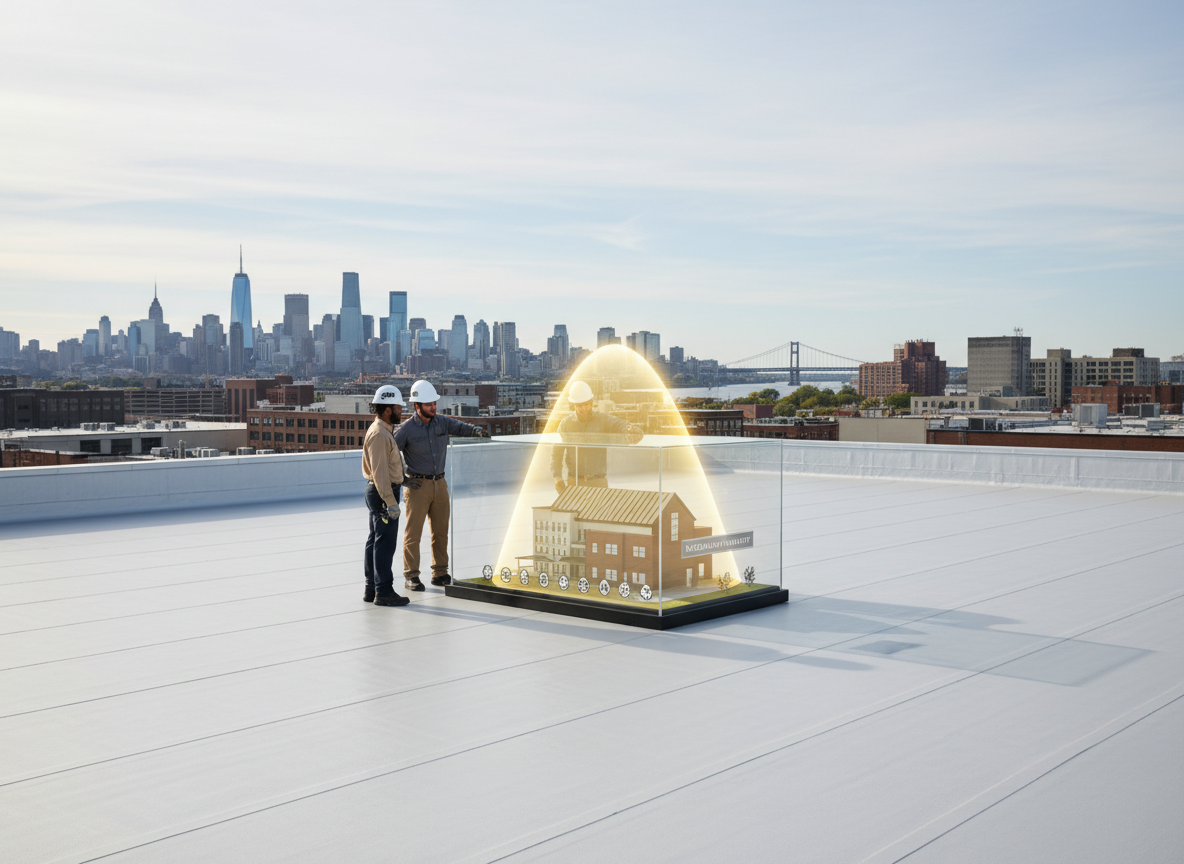
No dollar limit coverage gets quoted on commercial roofing proposals as though the meaning is obvious. It is not, and the gap between what owners assume it means and what the document actually says is where most warranty disputes start. Here is what the term covers, what it does not, and what keeps it valid.
Two different warranties, often confused
Every commercial roofing project produces two separate promises from two separate parties, and they cover different things.
The manufacturer's warranty covers the roofing system: the membrane, and depending on the terms, the insulation, fasteners and accessories that make up the assembly. It comes from the manufacturer, not the contractor, and it survives if the contractor goes out of business.
The workmanship warranty covers the installation. It comes from the contractor and it dies with them. A twenty year workmanship warranty from a company that closes in year four is worth what the paper cost.
When someone says a roof has a twenty year warranty, the first question is which of these they mean. Often it is the manufacturer's, and often the workmanship term is much shorter.
The three tiers of manufacturer coverage
Manufacturer warranties come in broadly three levels, and the difference between them is enormous.
Material only. The manufacturer replaces defective material. That is all. If a membrane fails because of a manufacturing defect, you get new membrane delivered. You pay for the labour to tear off the failed section, dispose of it, and install the replacement. On a large roof the labour is the overwhelming majority of the cost, so this coverage is worth far less than its length suggests.
Labour and material, with a cap. The manufacturer pays for both, up to a limit. That limit is usually tied to the original contract value or expressed as a fixed sum. It is real coverage, but a significant failure can exhaust it.
No dollar limit. The manufacturer pays for repair labour and materials with no cap tied to the original contract value. If a covered failure requires substantial work, the coverage does not run out partway through. This is the tier people mean when they say a roof is properly warranted.
The phrase no dollar limit is precise and it refers specifically to the absence of that monetary cap. It does not mean unlimited coverage in every sense, which is where the misunderstanding usually starts.
What NDL coverage does not include
An NDL warranty covers failure of the roofing system. It does not cover everything that can go wrong with a roof.
Damage from other trades is not covered. If a mechanical contractor drives a fastener through the membrane while servicing a rooftop unit, that is not a system failure and the manufacturer will decline it. Given how much commercial roof damage originates this way, this is a substantial gap.
Damage from lack of maintenance is not covered, and this is the exclusion that ends the most claims. A drain that was never cleared, ponding water that was left for years, sealant that was allowed to dry out and crack: all foreseeable, all preventable, all excluded.
Consequential damage is generally not covered either. The warranty deals with the roof. It does not pay for the tenant's damaged stock, the ruined ceiling, or the business interruption underneath the leak. That is what building insurance is for.
Acts of God, structural movement and alterations made without the manufacturer's approval are also typically excluded. Adding solar without checking the warranty terms first has cost more than a few owners their coverage.
The conditions that keep it alive
NDL coverage is conditional, and the conditions are where claims are usually won or lost years after installation.
Certified installation. The assembly generally has to be installed by an applicator the manufacturer has certified, using that manufacturer's specified components. Mixing a cheaper insulation or a different fastener into the assembly to save money at bid stage can invalidate the whole warranty, and the owner rarely finds out until they claim.
Manufacturer inspection at completion. The manufacturer usually sends its own inspector before the warranty is issued. This is separate from the municipal inspection and does not replace it.
Documented periodic maintenance. Most NDL warranties require the roof to be inspected and maintained on a schedule, with records kept. This is the condition owners breach most often, usually without realising, and it is the most common reason a claim gets refused. The manufacturer does not need to prove the lack of maintenance caused the failure. They need only establish that the required record does not exist.
Repairs by an authorised contractor. Once a warranty is in place, subsequent repairs generally have to follow the manufacturer's method with the manufacturer's materials. A cheap patch by whoever was available, using the wrong sealant on the wrong membrane, can void coverage across the entire roof rather than just the patched area.
What the record needs to look like
The maintenance record that protects an NDL warranty is not complicated, but it has to exist and it has to be contemporaneous. Reconstructing it after a claim is refused does not work.
What a manufacturer expects to see is dated visits at the required interval, photographs from each visit, written findings, and a record of what work was carried out. Keeping this alongside the warranty document, the assembly specification and the permit sign off puts everything a claim needs in one place.
For an owner with several buildings, this is worth systematising rather than leaving to each property. Warranties expire on different dates, carry different terms, and require different intervals.
What to ask before you sign
At proposal stage, five questions settle most of it. Which tier of coverage does this assembly qualify for. How long does the manufacturer term run and how long does the workmanship term run. Is the contractor certified by this manufacturer for this system. What inspection interval does the warranty require. And what specifically is excluded.
A contractor who can answer these without hedging is quoting a system they understand. One who cannot is quoting a price.
The warranty tier also belongs in the cost comparison. Two bids that look close on price can be very different once you account for one carrying NDL coverage and the other carrying material only. That difference will not show up for fifteen years, and then it will show up all at once.
Our commercial roof replacement page sets out which coverage different assemblies qualify for and when that gets decided in the process. Because documented maintenance is the condition most often breached, a commercial roof maintenance programme is what keeps the record intact, and a scheduled roof inspection produces the dated documentation manufacturers ask for. Newark building owners can find local context on commercial roof maintenance in Newark and commercial roof replacement in Newark.
Related reading: commercial roof permit rules under the New Jersey Uniform Construction Code.