
2026-08-17 · Mike Dalton
Year-Round Maintenance Tasks for Commercial Roofs in New Jersey
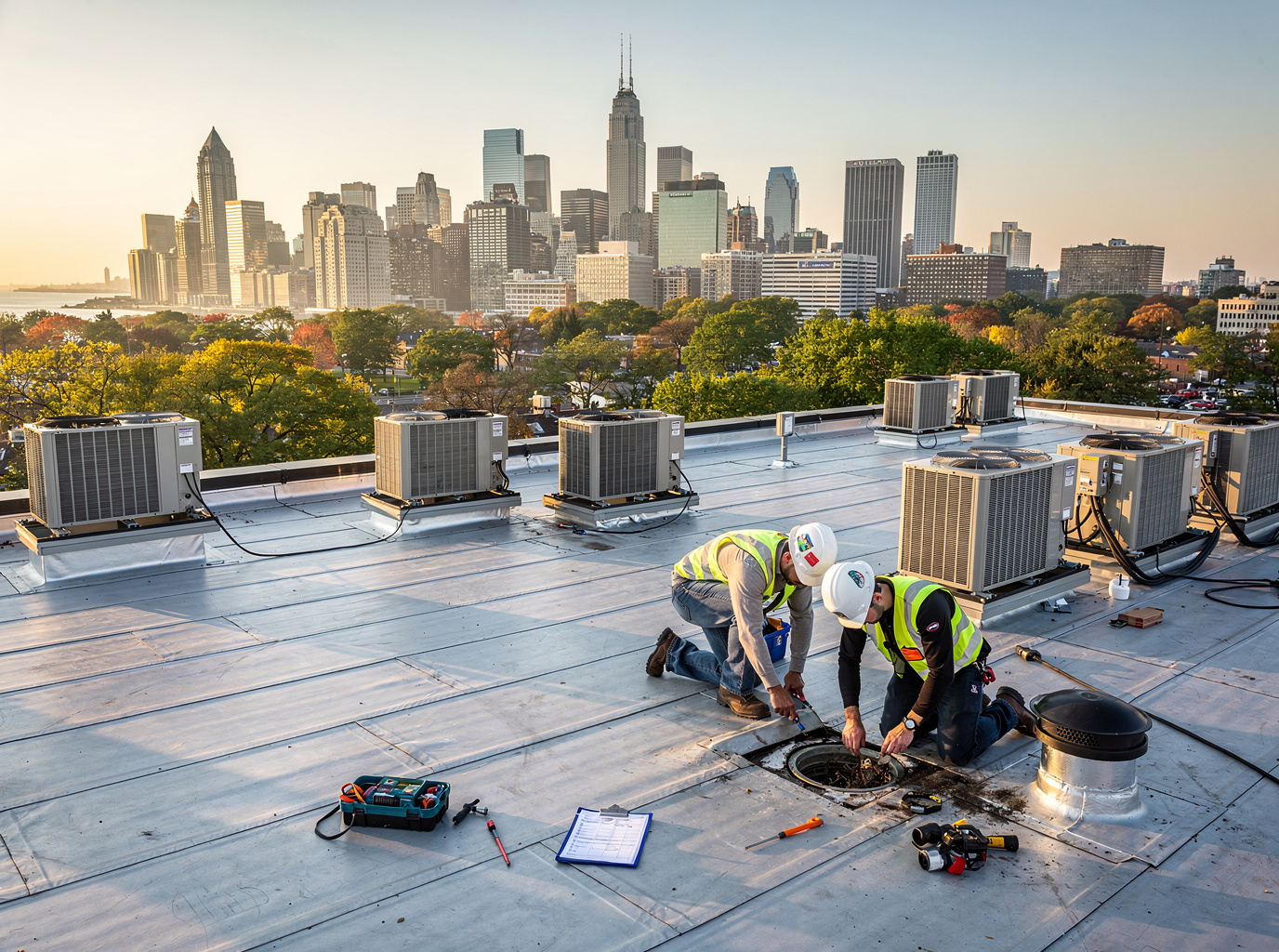
A commercial roof in Jersey City needs four rounds of real attention each year — one per season — plus two professional inspections, and skipping this cadence typically cuts 5-8 years off a roof's expected service life. That's the direct answer, but the details of what to check, and when, matter more than the general rule. After 15+ years working on flat and low-slope roofs from Journal Square to Liberty Harbor, the pattern is consistent: the buildings that skip spring and fall walkthroughs are the ones calling us for emergency commercial roof repair in January.
Spring: Post-Winter Damage Assessment
Spring is when winter's damage shows up. Freeze-thaw cycles crack sealants, expand fastener holes, and loosen flashing around rooftop units. Walk the roof in April or May and check:
- Membrane seams for lifting or separation, especially on TPO and EPDM systems
- Flashing around HVAC curbs, parapet walls, and roof penetrations
- Drains and scuppers for debris that accumulated over winter
- Ponding areas that held water after snowmelt — these are early warning signs of structural sag
Buildings in Bergen-Lafayette and Greenville with older EPDM roofs often show seam separation by this point if the roof is past 12-15 years old. This is also the right time to schedule a full commercial roof inspection if you haven't had one since fall — a trained eye catches issues a maintenance crew might miss.
Summer: Heat and Storm Prep
Jersey City's humid subtropical climate means summer brings intense UV exposure and sudden thunderstorms, both of which stress a roof differently than winter cold. UV degrades membrane surfaces over time, making TPO and PVC brittle at the edges if the roof is past its recoat window. Meanwhile, summer downpours test every drain and scupper on the building.
- Clear gutters and internal drains before storm season peaks (June-August)
- Check rooftop equipment pads and curbs for cracked sealant from thermal expansion
- Inspect metal roofing panels near Liberty State Park and Exchange Place for salt-air corrosion if the building sits close to the waterfront
- Recoat exposed membrane seams showing chalking or UV wear
This is also prime season for catching small leaks before they become interior damage. If you notice staining on ceiling tiles after a storm, don't wait — commercial roof leak repair costs far less than replacing water-damaged insulation and drywall underneath.
Fall: The Most Important Inspection of the Year
If you only do one professional inspection a year, do it in October or early November, before the first freeze. This is the window to catch anything that could turn into a burst pipe, collapsed drain, or membrane tear once temperatures drop below freezing. Buildings around Newport and Hudson Exchange with flat roofs and rooftop mechanical equipment are especially vulnerable here because equipment vibration loosens flashing over the warm months.
- Confirm all drains are clear and pitched correctly — ponding water that freezes adds significant weight
- Reseal any flashing gaps found during the spring or summer checks
- Check insulation for wet spots using a moisture meter if your roof is 10+ years old
- Trim overhanging branches near properties bordering green space or older lots in The Heights