
2026-08-17 · Mike Dalton
How Urban Pollution Affects Commercial Roofing Longevity
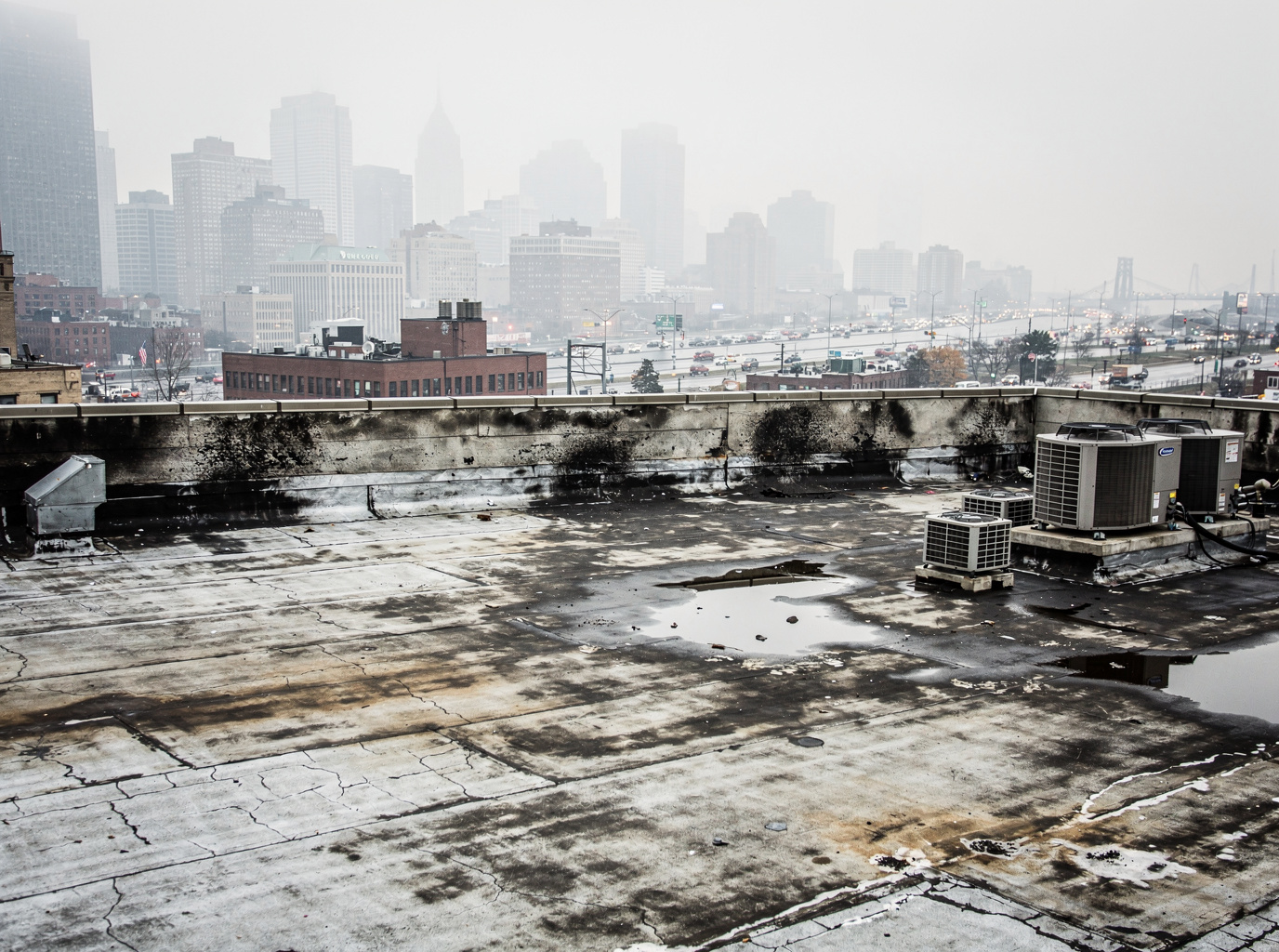
Urban pollution can shave 3–6 years off the expected lifespan of a commercial roof membrane in a dense, industrial-adjacent city like Jersey City. That's not a scare number — it's what we consistently see when we pull cores and compare membranes near Route 1&9 or the rail corridors against roofs in quieter residential pockets. Airborne particulates, acidic rainfall, and heat-trapping smog all accelerate the breakdown of roofing materials in ways that aren't always visible until a leak shows up.
Why Pollution Is Harder On Roofs Than People Think
A roof sits exposed 24/7, absorbing everything the air carries — soot from truck traffic near Journal Square, diesel particulate along the Hudson County rail lines, and salt-tinged moisture drifting off the harbor near Liberty State Park. These particles settle into the membrane's surface, and over time they act like fine sandpaper combined with a mild acid bath. On TPO and EPDM roofs, this buildup breaks down the surface polymers faster than clean-air exposure would, making the membrane brittle and prone to cracking years earlier than the manufacturer's rated lifespan.
Jersey City's humid subtropical climate compounds the problem. Hot, humid summers soften membranes and allow pollutants to bond more aggressively with the surface, while cold winters cause the embedded grime to freeze and expand microscopic cracks. That freeze-thaw cycle, repeated every year, is what turns surface-level soiling into actual structural fatigue.
The Specific Ways Pollution Degrades Roofing Materials
- Acidic deposition — rainfall picking up sulfur and nitrogen compounds from vehicle and industrial exhaust lowers the pH of standing water on flat roofs, slowly eating away at seams and adhesives.
- Particulate abrasion — wind-driven soot and dust act as an abrasive layer, especially on roofs near Route 440 or the Turnpike extension, thinning membrane surfaces over time.
- UV reflectivity loss — a grimy roof absorbs more heat instead of reflecting it, which raises surface temperatures and speeds up thermal aging of the membrane.
- Clogged drainage — soot and debris combine into a sludge that clogs scuppers and drains, leading to ponding water that pollution-heavy areas see more often than cleaner suburbs.
- Corrosion on metal components — flashing, fasteners, and metal roofing panels near industrial corridors corrode faster when exposed to airborne sulfur compounds.
Neighborhoods Where We See This Most
Buildings in Bergen-Lafayette and Greenville, closer to rail yards and heavier truck routes, tend to show membrane discoloration and granule loss faster than properties in Van Vorst Park or Paulus Hook Historic District, where traffic is lighter. Waterfront properties near Liberty Harbor, Exchange Place, and Newport face a different mix — salt air off the harbor near Ellis Island combines with urban runoff to create a particularly corrosive environment for metal flashing and fasteners. High-rise commercial roofs around Newport Centre also catch more airborne particulate simply due to height and wind exposure.
What This Means for Repair vs. Replacement Decisions
Pollution damage rarely causes a sudden failure — it's cumulative. A roof that should have given a property owner 20 years might start showing seam separation or granule loss at year 14 or 15. This is why regular commercial roof inspection matters more in a dense urban market like ours than in a rural setting; catching pollution-related wear early through a scheduled commercial roof maintenance plan lets us clean, reseal, and patch before small issues become full membrane failures. Once deterioration is widespread rather than isolated, commercial roof repair stops being cost-effective and it's time to talk about commercial roof replacement instead — a decision we walk through in more detail in our piece on choosing repair over full replacement for flat roofs.
Practical Steps to Slow Pollution-Related Aging
- Rinse debris and soot buildup off flat roofs at least twice a year — especially after winter, when road salt and grime accumulate.
- Clear drains and scuppers quarterly; clogged drainage from particulate buildup is one of the most common causes of ponding water we find on service calls.
- Inspect flashing and fasteners for early corrosion signs, particularly on properties within a few blocks of the waterfront.
- Choose reflective, pollution-resistant membranes like TPO for re-roofing projects — see our TPO commercial roofing page for how it holds up against grime compared to EPDM.
- Schedule inspections seasonally, not just after storms, since pollution damage builds quietly and doesn't always announce itself with a leak.